One Day in Santorini: The Perfect Itinerary & Travel Guide
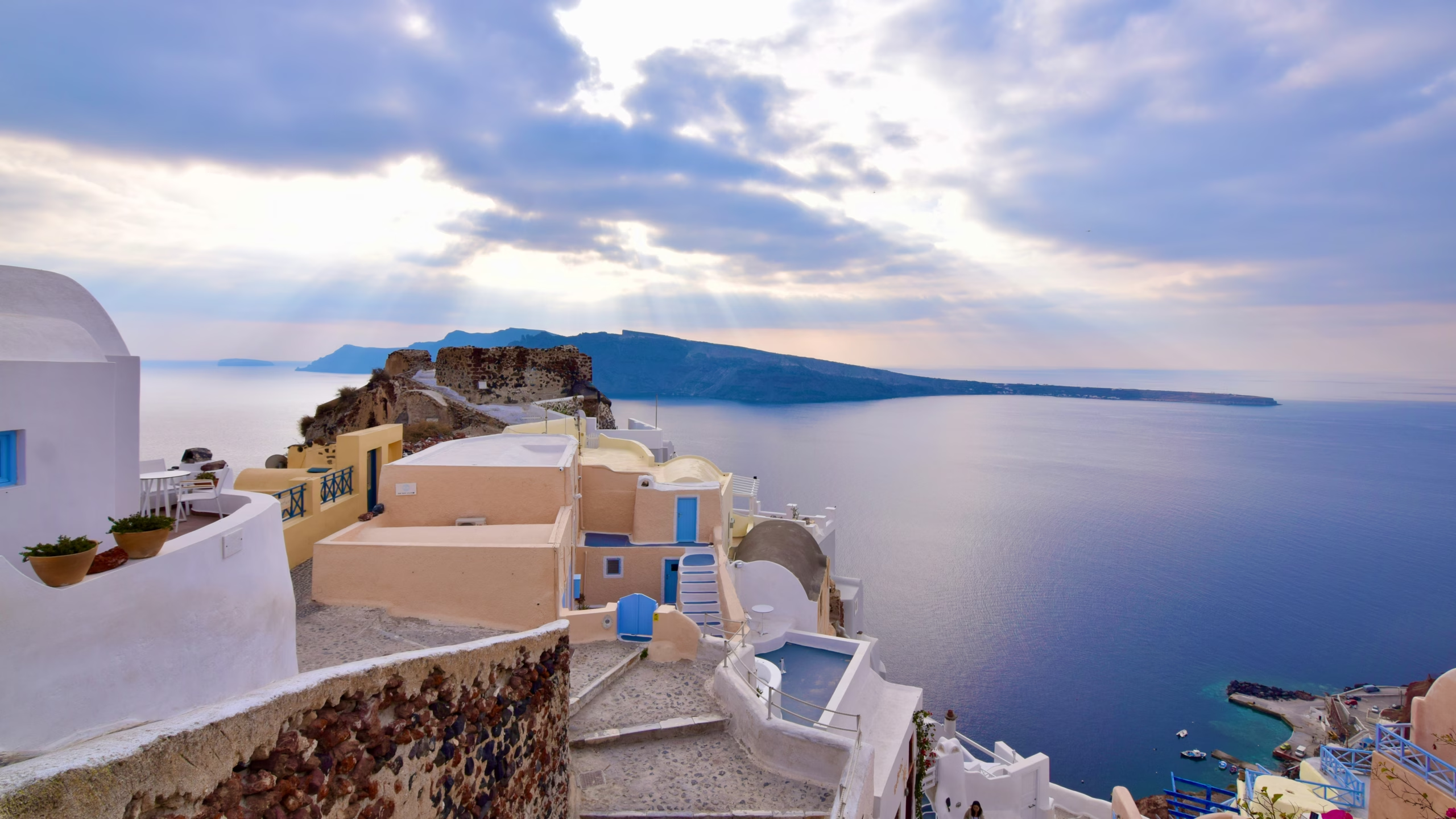
The mighty volcano of Santorini erupted around 1600 BC, sinking the centre of the island and giving birth to one of the most spectacular landscapes on earth. White-washed villages cling to the rim of the caldera, blue-domed churches catch the afternoon sun, and the deep, deep blue of the Aegean stretches all the way to the horizon. Santorini is, without exaggeration, one of the most beautiful places I have ever set foot on.
Only one day in Santorini! Just like my one day in Athens, my friends thought I was crazy. To be fair, they were right — Santorini is the kind of place where you could happily spend a week doing nothing but watching the light change on the caldera. But not everyone has that luxury. Maybe you are on a cruise stop, maybe you are island-hopping through the Cyclades, or maybe (like me) you are squeezing it in after a trip to Athens. The good news is, if you plan smart, one day in Santorini is enough to see the highlights and fall in love with the island. This guide will show you exactly how.
I visited Santorini on the 25th of November, in the very quiet shoulder season. I will share why that turned out to be a blessing, what to skip, what to absolutely not miss, where to stay, and where to eat so you can pack the most into 24 hours on this incredible island.
Is One Day in Santorini Enough?

Let me be honest with you. One day in Santorini is not ideal. The island has at least three days’ worth of highlights — the caldera villages, the volcanic beaches, the ancient ruins of Akrotiri, the wineries, the boat tour to the volcano, the hike from Fira to Oia. If you can stretch your trip to two or three days, you absolutely should.
But one day is doable. With an early start, a smart route, and one overnight stay, you can comfortably see the most iconic parts of Santorini and still catch the famous sunset. The trick is to not try to see everything. Pick the highlights, accept that you will leave wanting more, and promise yourself you will come back.
I landed at Santorini airport (JTR) at around 8:00 AM, spent the whole day exploring, slept in Oia, and flew out the following morning. It was rushed but unforgettable. Here is exactly how I did it, and how you can too.
How to Get to Santorini from Athens
Most travellers reach Santorini from Athens, and you have two options:
By Flight
The fastest way. The flight from Athens International Airport (ATH) to Santorini (JTR) takes only 45 minutes, and there are multiple daily flights from carriers like Aegean Airlines, Sky Express, and Olympic Air. In off-season, you can find tickets for €40–€80 one way. In peak summer, prices climb to €150 or more. This is the option I took, and for a one-day trip, it is the only sensible choice — a ferry will eat half your day.
By Ferry

The scenic way. Ferries leave from Piraeus port in Athens. A high-speed ferry (Seajets, Blue Star) takes 4.5 to 5 hours and costs around €60–€80. The conventional ferry takes 7 to 8 hours and is cheaper at around €40. Ferries are wonderful if you have the time, but they will steal an entire day from a short trip. If Santorini is one stop on a bigger island-hopping route, a Eurail Greek Islands Pass can work out cheaper and far more flexible than booking each ferry leg separately.
Travel hack: If you are flying, book a seat on the left side of the plane when flying from Athens to Santorini. You will get a stunning aerial view of the caldera on approach. On the way back, sit on the right.
If you are planning the wider trip, my guide on One Day in Athens covers exactly what to see in the Greek capital before flying out to the islands. Athens and Santorini together make a perfect short Greece trip.
Best Time to Visit Santorini
Santorini has a long tourist season, from April to October, with peak crowds in July and August. Here is how the seasons compare:
- June to August (peak): Hot, sunny, every restaurant is open, every cruise ship is docked, and the sunset spots are mobbed. Hotel prices are at their highest, often double the off-season rate. Beautiful, but exhausting.
- April to May, September to October (shoulder): The sweet spot for most travellers. Warm enough for the beach, the sea is still swimmable in September, and crowds thin out. Prices drop. Most people consider this the best time to visit Santorini.
- November to March (off-season): Quiet. Many restaurants and hotels in Oia close from late October to early April, so check before you book. The weather is unpredictable — sunny one moment, windy and grey the next. Sunset is early (around 5:00 PM in November).
Why I Loved November in Santorini

I visited at the very end of November, and I will be honest — it was a gamble. Many shops were shut, the boat tours had stopped running, and the famous sunset terraces in Oia were practically empty.
But that emptiness was the magic. I had the cobblestone alleys to myself. The light in November is soft and golden, perfect for photos. Hotel rates were a quarter of summer prices. And the Oia sunset — usually packed shoulder-to-shoulder with hundreds of people — felt private.
If you do not need to swim and you do not mind some closures, the off-season is a wonderful and seriously underrated time to visit Santorini.
How to Get Around Santorini in One Day
Santorini is small (about 76 km²), but the road network is winding and the towns are spread out. Here are your options:
- Public Bus (KTEL Santorini): Cheap and reliable. Fares are €1.80 to €2.50 per trip. All buses route through Fira, the capital, which acts as the central hub. Buses run regularly to Oia, Akrotiri, Kamari, and Perissa. This is what I used and it worked perfectly for a one-day trip.
- Rental Car or ATV: Gives you maximum freedom. A small car costs €30–€50 per day in season. ATV rental is around €25–€40 per day. Be careful — Santorini roads are narrow, traffic is chaotic in peak season, and parking in Oia is a nightmare.
- Taxis: Limited and expensive. There are fewer than 40 taxis on the entire island, so during peak times you will struggle to find one. Expect €25–€35 for a one-way trip from the airport to Oia.
- Pre-booked Transfers: The most stress-free option, especially for arrival. You can book a private airport transfer in advance to be sure of a smooth start.
- Organised Tours: If you want to skip the planning, a guided day tour can pack Akrotiri, Red Beach, a winery, and Oia sunset into a single coach. A solid choice if you have just one day and zero patience for logistics. Cruise passengers in particular should look at a small-group island tour built for cruise travellers — it is timed around ship schedules so you are never anxious about making it back to port. If you would rather have the freedom to linger, a private taxi-style tour of Oia village lets you set your own pace with a driver handling the logistics.
For a one-day trip with an early arrival, I recommend a combination: pre-booked transfer to your hotel, then public bus + walking for the rest of the day. That is exactly what I did.
The Perfect One Day in Santorini Itinerary
Here is the itinerary I followed, optimised for someone arriving early in the morning and leaving the next day. It hits the three biggest highlights — Akrotiri, Red Beach, and Oia (including sunset) — without rushing.
Morning: Akrotiri Archaeological Site
8:30 AM – 11:00 AM
If you land early, drop your bag at your hotel in Oia, then catch the bus south to Akrotiri. Trust me — start here before the island wakes up.
Akrotiri is often called the “Minoan Pompeii” and for good reason. Around 1600 BC, the same massive volcanic eruption that gave Santorini its caldera buried this thriving Bronze Age city under layers of ash. Unlike Pompeii, no human remains have been found here, suggesting the residents had warning and escaped. What was left behind — three-storey buildings, sophisticated drainage, vivid frescoes — was preserved almost perfectly for 3,600 years.
Walking through the covered excavation site, under a modern bioclimatic roof, you can see actual streets, doorways, and pottery exactly where they were left. The famous Akrotiri frescoes are now in the National Archaeological Museum in Athens (which makes the Athens day-trip even more rewarding), but the site itself is one of the most quietly powerful places I have ever visited.
Practical info: Entry is €12, open from 8:00 AM. Allow about 90 minutes.
👉 Book a skip-the-line Akrotiri ticket — saves time, especially in peak season.
Late Morning: Red Beach
11:00 AM – 1:00 PM
A short 5-minute drive (or 20-minute walk) from Akrotiri brings you to one of Santorini’s most photogenic beaches. Red Beach is exactly what it sounds like — a small cove backed by towering red volcanic cliffs that crumble into rust-coloured pebbles at the water’s edge. The contrast between the burnt-red cliffs and the impossibly turquoise water is striking.
A word of caution. Red Beach is not a swimming-and-sunbathing beach in the traditional sense. There are no sunbeds, no taverna, and the cliffs above are unstable — there are official warning signs about rockfall. In fact, the beach is sometimes partially closed off for safety. Most people come for the view and a few photos rather than a full beach day.

The best photo spot is from the viewpoint above the beach, reached by a short scramble up the rocky path from the parking area. From up there, you get the postcard shot.
After the photos, head back to the bus stop and ride up to Fira, then transfer to the Oia bus. The whole ride takes about an hour and gives you a lovely cross-section of the island.
Afternoon: Wander the Streets of Oia
2:00 PM – 4:30 PM
This is the heart of your day. Oia (pronounced “ee-ah”) is the most beautiful village on Santorini, and one of the most photogenic places on earth. White-washed cubic houses tumble down the cliff like a frozen waterfall. Pastel pinks, ochres, and butter yellows interrupt the white. Blue-domed churches punctuate the skyline. And every few steps, a narrow alley opens up onto another view of the caldera.

The single best thing you can do here is simply walk. Get pleasantly lost in the warren of marble-paved alleys. Climb the narrow stairs. Lean over the white-washed walls and look down at the sea a thousand feet below. Find a quiet courtyard with a bougainvillea spilling over a pastel wall, and just stand there for a minute.

Every corner you turn in Oia rewards you. Wooden doors painted in cobalt and ocean blue, set into white-washed walls weathered by salt and sun, are everywhere. Photographers love them. So do I.

The village is a maze of cobblestone lanes that twist and dip down the cliff, and half the joy is simply following one to see where it goes. Every few steps the sea reappears between the buildings.
A few specific spots to look for:

- The Blue Domes of Oia. The most photographed cluster sits near the Three Bells of Fira (no, the irony is not lost on me — Fira’s “three bells” are actually in Oia). Walk towards the northwest end of the village and follow the crowds. Even in November, this spot is busy.

- Oia Castle (Kastro). The ruins of a 15th-century Venetian castle at the northwestern tip of the village. This is the prime sunset viewpoint, and it gets seriously crowded. Arrive at least an hour before sunset to claim a spot.
- The Three Bells of Oia. A small white bell tower with three arches and the Greek flag flying beside it. One of the most charming corners of the village.

- The Windmills. At the western end of the village, two whitewashed windmills mark the edge of the cliff. The path here connects to the main sunset viewing area, and in summer the ceremonial Greek Orthodox bunting strung overhead adds an extra layer of colour to the scene.
- Ammoudi Bay. A tiny fishing harbour 300 steps below Oia. If your knees are up for it, climb down, eat fresh fish at one of the tavernas, and then either climb back up or take a donkey or taxi. (I would skip the donkey rides — there are real animal welfare concerns, and walking is honestly fine.)

Stop somewhere for a slow lunch with a view. Order a Greek salad, some fava (the local yellow split-pea dip), and a glass of local Assyrtiko wine. Lunch in Oia is not cheap — expect €25–€40 per person at a view restaurant — but the setting is hard to beat.

Sunset: The Famous Oia Sunset
4:30 PM – 6:00 PM (later in summer)
This is the moment everyone comes for. The Santorini sunset, watched from the cliffs of Oia, is one of those rare bucket-list experiences that actually delivers.

The colours in November are spectacular — the sky turns pink, peach, and lilac, and the white walls of the village take on a warm glow. In summer, the sun sets directly behind the caldera and the small islet of Thirassia, which makes for the classic postcard sunset. In winter, it sets further south and you lose the dead-centre framing, but the soft pastel skies more than make up for it.

Where to watch the sunset in Oia:
- Oia Castle (Kastro). The most famous and most crowded spot. Arrive 60–90 minutes early in summer, 30 minutes early in shoulder season.
- The path along the caldera. Anywhere along the cliff-edge walkway between the castle and the windmills offers a great view, and is less packed than the castle.
- From a restaurant or hotel terrace. Many caldera-facing restaurants are sunset-viewing spots in their own right. Reservations are essential.
- From the water. Watching the sun go down from a boat, with the cliffs of Oia glowing above you, is a completely different experience from fighting for space at the castle. A Santorini sunset cruise typically includes swimming stops, dinner on board, and the best seat in the house for the main event.
- Imerovigli (alternative). The neighbouring village to the south. Less famous but the views are arguably better, and the crowds are a fraction of Oia.
A word of warning. The Oia sunset has become a serious tourist phenomenon. In July and August, the castle can hold over a thousand people, all crammed shoulder to shoulder. People clap when the sun disappears (yes, really). Some travellers find it magical, others find it ruined by the crowds. Manage your expectations. If you can visit in shoulder or off-season, the experience is much, much better.
After sunset, the village comes alive with restaurants and small bars. Have dinner with a view, then walk back to your hotel. You earned it.
Other Top Things to Do in Santorini
If you can stretch your trip to two or three days (please do), here is what to add:
- Fira (the capital). More commercial than Oia but with stunning caldera views, the Museum of Prehistoric Thera (where the Akrotiri frescoes live), and a livelier nightlife scene.
- Volcano and Hot Springs Boat Tour. A half-day boat tour from the old port of Fira takes you to the active volcanic islet of Nea Kameni, where you can hike to the crater, then to the hot springs at Palea Kameni. Not running in November but a highlight in summer — you can book a Santorini half-day boat tour here.
- Fira to Oia Caldera Hike. A 10-km cliff-edge hike that takes about 3–4 hours one way. Considered one of the most beautiful walks in Greece.
- Santorini Wine Tasting. Santorini wines, especially the crisp white Assyrtiko, are extraordinary. The vines grow in volcanic soil and are pruned into low, basket-shaped kouloura to protect from wind. A wine tour visits 3–4 wineries with views to die for. For something more hands-on, a Santorini cooking class with lunch and wine tasting combines local food and wine in one afternoon — a lovely way to slow down and actually taste the island.
- Imerovigli. The “balcony of the Aegean.” Higher elevation than Oia, fewer crowds, and the best caldera views on the island. A half-day tour of Oia, Imerovigli and the Three Bells of Fira is an easy way to string the three prettiest caldera spots together if you are short on time.
- Pyrgos. A traditional inland village built around a Venetian castle. Lovely for a quiet afternoon and a glimpse of non-touristy Santorini.
- Perissa or Kamari Beach. Long stretches of black volcanic sand. Properly organised with sunbeds, tavernas, and beach bars. The east coast of Santorini.
Where to Stay in Santorini: Best Hotels by Area

Where you stay in Santorini matters almost as much as which hotel you pick. The island has four main areas, each with its own vibe and price range. For a one-day trip, I recommend Oia (so you wake up next to the famous sunset and the alleys you’ll walk that afternoon), but the alternatives are worth knowing if Oia is fully booked or out of budget.
Choosing Your Area at a Glance
- Oia — The most beautiful and the most photographed. Best for honeymooners, couples, photographers, and first-time visitors who want the iconic experience. Most expensive. Most crowded.
- Imerovigli — The “balcony of the Aegean.” The highest village on the caldera with arguably the best views on the island. Quieter than Oia, popular with luxury and romance travellers.
- Fira — The capital. Lively nightlife, more shops and restaurants, better budget options, easy bus connections to everywhere. Caldera views without Oia’s price tag.
- Perissa / Kamari — The east coast. Long black-sand beaches, relaxed beach-resort vibe, the most affordable area on the island. No caldera view, but a totally different (and underrated) experience.
One important booking tip before the list: in Oia and Imerovigli, most hotels have either a classic caldera view (facing the volcano and the white cliffside villages) or a direct sunset view (facing west toward Ammoudi Bay and the open sea), but rarely both. Caldera-view rooms see the iconic Santorini panorama; sunset-view rooms watch the sun drop straight into the sea. Decide which matters more to you before booking.
Best Hotels in Oia (Most Iconic, Most Expensive)
Luxury (€500+ per night)
- Canaves Oia Suites — The benchmark for Cycladic luxury in Oia. Twenty-four suites carved into the cliffside, two infinity pools facing the caldera, and a rare elevator that saves your legs after a day of walking. Hosts the renowned Petra restaurant on-site.
- Canaves Oia Epitome — The newer, more modern sister property to Canaves Oia Suites. Spacious villas with private pools and what many guides rate as the best sunset view in Oia. Great if you want luxury without the central-Oia crowds.
- Katikies Santorini — One of the most photographed hotels in Greece. Three dazzling infinity pools that look like they float over the caldera. Pure Santorini-postcard luxury.
- Andronis Boutique Hotel — Cliffside cave suites with private plunge pools and direct caldera views. The Lycabettus restaurant on-site is the best sunset dinner table in Oia.
- Mystique, a Luxury Collection Hotel — Eighteen cave-style suites set slightly away from the main tourist path. Quieter and more private than central Oia, with the Lure restaurant on-site.
- Perivolas Hotel — The original Oia boutique. Understated, serene, soulful — a long-standing favourite of honeymooners.
Mid-Range (€150–€350 per night)
- Art Maisons Oia Castle — Sunset-view rooms right on the Ammoudi side of Oia, fantastic value for the view you get.
- Esperas Santorini — Traditional cave houses with caldera views, a calmer pocket of Oia.
- Santorini Secret Suites & Spa — On the main path in Oia, gorgeous main pool, suites with private jacuzzis. Excellent location for first-timers.
- Ikies Santorini — Intimate cave-style boutique on the quiet edge of Oia. Famous for personalised service.
- Fanari Villas — Caldera-edge villas with a great pool and on-site restaurant. The Fanari restaurant is itself a popular sunset dining spot.
Budget (under €120 per night)
- Rimida Villas — One of the most affordable ways to get a real caldera view in the Oia area.
- Agnadi View Villa — On the edge of Oia village (still walkable), genuinely affordable, with caldera-facing rooms.
Best Hotels in Imerovigli (Quieter Alternative to Oia)
Imerovigli sits between Fira and Oia at the highest point on the caldera. Many seasoned Santorini travellers say the views here are even better than Oia, and the crowds are a fraction of what you find in the main villages. It is my top recommendation if you want luxury without the Oia tourist crush.
- Grace Hotel, Auberge Resorts Collection (Luxury) — One of the most awarded hotels on the island. Twenty suites with private plunge pools, an iconic infinity pool perched on the cliff edge, and the Michelin-recognised Varoulko Santorini restaurant on-site. Adults-only (children over 14 welcome). Consistently rated as one of the top luxury stays in all of Greece.
- Cavo Tagoo Santorini (Luxury, modern) — A stylish, design-forward alternative to the classic cave-style hotels. Fifteen all-suite accommodations, all with private heated pools or jacuzzis, dramatic minimalist architecture, and a 9.7/10 rating from couples on Booking.com. Best for younger luxury travellers who want a fresher aesthetic.
- Astra Suites (Mid-luxury) — A long-standing Imerovigli favourite known for warm, personal service. Beautiful sunset views and an excellent on-site restaurant.
Best Hotels in Fira (Best Value with Caldera View)
Fira is the capital and the transport hub of the island. It is also the area where you get the most caldera-view hotel for your money. Buses to Oia, Akrotiri, and the beaches all run through Fira, so this is also the easiest base for a multi-stop itinerary.
- Athina Luxury Suites (Mid-luxury) — Boutique caldera-cliff hotel in a quiet pocket of Fira, five minutes’ walk from the main square. Heated infinity pool with a swim-up bar, suites with private jacuzzis, 9.4/10 on Booking.com. The strongest “caldera view without Oia prices” recommendation on this list.
- Astro Palace Hotel & Suites (Mid-range) — Modern cave-style suites with a large pool and a full spa. Right in central Fira, walking distance to shops and nightlife. Excellent value for a 5-star property.
- Volcano View Hotel (Upscale value) — On the Fira outskirts with three large outdoor pools and sweeping caldera views. Better for travellers who want resort-style facilities and don’t mind a short bus or taxi ride to the main village.
Best Hotels in Perissa & Kamari (Near the Beach, Most Affordable)
If you want a beach holiday rather than a caldera-view holiday, the east coast is where to look. The black volcanic sand of Perissa and Kamari is properly organised with sunbeds, beach bars, and tavernas. Prices are dramatically lower than the caldera, and the bus connection to Fira and on to Oia is straightforward.
- Holiday Beach Resort Santorini (Budget) — Relaxed beach resort steps from Perissa’s black-sand beach. Outdoor pool with a pool bar, free breakfast, very affordable rates. Great for budget travellers who want sun, sand, and the freedom to bus over to Oia for a day.
- Caveland Hostel (Hostel, Karterados) — A converted winery turned hostel just outside Fira. The best hostel on the island, perfect for solo travellers and backpackers. Beautiful cave-style architecture and a great pool.
👉 Booking tip: In peak season (June–August), book at least 3–6 months in advance. Oia’s best caldera-view rooms sell out fast and prices climb steeply close to the date. In November and shoulder season, you can often find the same hotels at 50–70% off.
Best Restaurants in Santorini
Eating in Santorini is half the experience. Here are the restaurants worth seeking out, organised by location and style. Almost all of them require a reservation in peak season — book a few days ahead, or you will not get a table.
Best Restaurants in Oia
- Roka (€€) — Tucked away from the main tourist drag, Roka is the kind of place locals send you to. Traditional Greek food, no caldera view, but the cosy garden setting and the lamb dishes make up for it.
- Candouni (€€) — Romantic hidden garden setting in a restored Cycladic mansion, family recipes, live music in the evening. Great for a special-occasion lunch.
- Lycabettus (€€€€) — The signature restaurant of Andronis Luxury Suites and arguably the best sunset dinner table in Oia. Tables are carved into the cliff face itself.
- Lure at Mystique (€€€€) — Contemporary Greek tasting menus with a direct caldera view.
- Red Bicycle (€€€) — Upscale European-Greek fusion in a 19th-century Oia mansion. Good for travellers who want a break from traditional Greek menus.
- Floga (€€€) — Stylish cliffside spot with a strong reputation for sea bass and Greek classics done well.
- Pitogyros Traditional Grill House (€) — The best gyros in Oia. Massive portions for €5–€7, a budget life-saver in expensive Oia.
Best Restaurants in Ammoudi Bay (Below Oia)
The 300 steps down to Ammoudi Bay lead to a row of seafood tavernas right on the water — fishing boats tied up at the dock, octopuses hanging out to dry, lobster pasta as the local speciality. This is one of the most atmospheric meals on the island, especially at sunset.
- Sunset by Paraskevas (€€€) — Famous for its lobster spaghetti and featured in The New York Times and on the Travel Channel. The most established Ammoudi taverna.
- Ammoudi Fish Tavern (€€€) — The biggest and busiest of the bay. Fresh fish by the kilo, shaded patio dining right at the water’s edge.
- Dimitris Ammoudi Taverna (€€) — Family-run for over 30 years. Famous lobster spaghetti, lower prices than its neighbours, equally fresh seafood.
- Taverna Katina (€€) — A long-standing local favourite. Simple, no-frills, fresh fish straight from the boat.
Tip: Book Ammoudi tavernas in advance for sunset dinner — they fill up by late afternoon. Lunch is far easier and the views are just as spectacular in daylight.
Best Restaurants in Imerovigli & Fira
- Athenian House (Imerovigli) (€€€€) — Considered one of the best sunset-splurge restaurants on the island. Near-Michelin-level cooking with strong plant-based options.
- Avocado (Imerovigli) (€€) — Healthy, fresh Mediterranean food, very vegetarian-friendly.
- Naoussa (Fira) (€€) — Lively atmosphere, excellent traditional Greek food, beautiful caldera views.
- Ouzeri (Fira) (€) — Best meze in Fira. No view, but consistently delicious small plates and a strong local following.
Best Off-the-Beaten-Path Restaurant on the Island
- Metaxi Mas (Exo Gonia) (€€) — Routinely rated the best overall restaurant in Santorini by food writers. Cretan-leaning menu, away from the caldera-edge tourist crowd, reservations essential weeks in advance. Cash preferred.
What to Eat in Santorini
Greek food on Santorini has its own volcanic twist. A few things to try:
- Fava. A creamy yellow split-pea purée, drizzled with olive oil and topped with capers and onion. Santorini fava has PDO status and is exceptional.
- Tomatokeftedes. Sun-dried tomato fritters made with the small, intensely sweet Santorini cherry tomatoes. A must-try.
- White Aubergine. Santorini’s volcanic soil grows a unique sweet white aubergine. You will find it in salads and dips.
- Lobster Spaghetti. The signature dish of Ammoudi Bay. Almost every taverna has its own secret-recipe version.
- Fresh Grilled Octopus. Hung out to dry in the sun before being charred on the grill. Order it everywhere.
- Assyrtiko Wine. Crisp, mineral, the perfect partner to Greek salad. Order it everywhere.
- Melitinia. A traditional Santorinian cheese pastry sweetened with mastic. Look for it at breakfast spreads or bakeries.
What to Pack for One Day in Santorini
- Comfortable walking shoes. Oia and Fira are built on slopes with marble cobblestones that are surprisingly slippery. Leave the heels at home.
- Sun protection. Even in November the sun is strong. Sunglasses, sunscreen, and a hat are essential in summer.
- A light jacket or layers. Wind on the caldera can be sharp, especially around sunset and in the off-season.
- Camera or a fully charged phone. You will take more photos in Santorini than anywhere else on your trip.
- Cash. Many smaller tavernas and bus tickets are cash only. Have €50–€100 in small notes.
- A reusable water bottle. Stay hydrated, especially if you are walking.
- Swimsuit (in season). If you are visiting between May and October and want to dip in at Red Beach or Kamari.
How Much Does One Day in Santorini Cost?
A rough budget breakdown for a one-day Santorini trip from Athens:
| Item | Budget | Mid-Range | Luxury |
|---|---|---|---|
| Round-trip flight from Athens | €80–€120 | €120–€180 | €180+ |
| Hotel (1 night in Oia) | €60–€100 | €150–€300 | €500+ |
| Bus transport (full day) | €8 | €8 | (private transfer) €100 |
| Akrotiri entrance | €12 | €12 | €12 |
| Lunch | €10 | €25 | €60+ |
| Dinner with view | €25 | €50 | €100+ |
| Coffee, snacks, water | €10 | €15 | €25 |
| Total | ~€200 | ~€380 | ~€1000+ |
Santorini is more expensive than mainland Greece, especially in peak season. A shoulder-season trip can save you 30–50% on accommodation alone.
Practical Tips for Your One Day in Santorini
- Start early. The cruise ships dock around 10:00 AM and the village gets significantly busier after that. Akrotiri at 8:30 AM was practically empty.
- Skip the donkey rides. There are real animal welfare concerns and the steps down to Ammoudi are perfectly walkable.
- Drink the tap water carefully. Santorini’s tap water is desalinated and technically safe, but locals recommend bottled water for drinking. Brush your teeth with tap, drink from the bottle.
- Book everything in advance for summer. Hotels, ferries, sunset-view restaurants, even the cable car in Fira can sell out hours ahead in July and August.
- Tip 10% in restaurants. Service is generally not included in the bill.
- Greek hospitality is real. A polite kalimera (good morning) or efharisto (thank you) goes a long way.
- The wind matters. Santorini sits in a wind tunnel called the Meltemi during summer. A windy day at the airport can mean turbulent landings and cancelled boat tours.
- Sunrise is a hidden gem. If you can drag yourself out of bed, the Oia sunrise (around 6:30 AM in summer, 7:30 AM in winter) is almost completely empty. The caldera fills with soft pink light and you can have the whole village to yourself.
Map for One Day in Santorini
Here is a quick visual of the route — Akrotiri to Red Beach in the south, then up to Oia for the afternoon and sunset.
Final Thoughts
One day in Santorini is, in many ways, like one day in Athens. It is not enough. But it is enough to be unforgettable.
I walked the narrow stairs of Oia with the sea a thousand feet below me. I watched the November sun set over the caldera while a Blue Star ferry slid silently across the water. I stood in 3,600-year-old Bronze Age streets at Akrotiri and tried to imagine the day the volcano blew. And by the time I flew out the next morning, I had already started planning when I would come back.
That is the thing about Santorini. It is more beautiful than the photos. And that is saying something.
If you are doing the classic short Greece trip, pair this with my one day in Athens guide for the perfect 3-day intro to Greece.
Have you been to Santorini? Did you have just one day or a full week? Let me know in the comments below — I would love to hear what you would add to this list.